
The flogged meaning in the Bible refers to being beaten with a whip as punishment. Flogging in the Bible appears in the suffering of Jesus Christ, Roman punishment, and Christian persecution. Understanding the biblical meaning of flogged helps explain Jesus’ suffering before crucifixion and His sacrifice for humanity.
The Bible also describes Apostle Paul enduring flogging for preaching the gospel. Exploring Bible verses about flogging, Greek word origins, and the meaning of scourging in the Bible reveals important lessons about faith, grace, sacrifice, and Christ’s suffering.
Flogged Meaning in the Bible: The Basic Definition
The flogged meaning in the Bible is to be beaten with a whip, rod, or strap as punishment, correction, or persecution. Under Jewish law, flogging was limited to forty lashes. Under Roman rule, it had no clear limit. Jesus was scourged before His crucifixion, and the word is also used for God’s loving discipline.
Flogged or Scourged?
The flogged meaning in the Bible and the scourged meaning describe the same act. The King James Version usually says “scourged” or “stripes.” The NIV and many newer versions say “flogged” or “lashes.” You will also see “beaten” in some passages.
The Bible uses flogging in three main ways:
- As legal punishment under the Law of Moses
- As persecution of Jesus and His followers
- As a figure of speech for God’s fatherly discipline
Flogged Meaning in the Bible in Hebrew and Greek
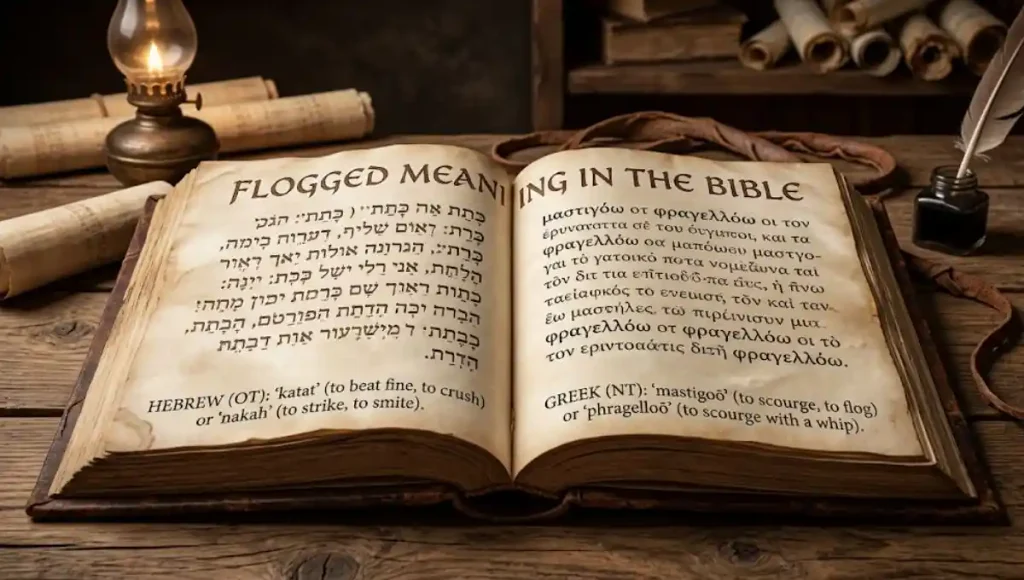
The Old Testament has no single Hebrew word that matches “flog.” Deuteronomy 25:2 and 25:3 use nakah, which means “to strike,” and makkah, which means “a blow” or “a stripe.” The idea is a measured beating ordered by a judge.
The New Testament is more specific. Three Greek terms matter:
- Mastigoo: to whip or scourge. It appears seven times, including John 19:1 and Hebrews 12:6.
- Phragelloo: a Latin loanword from flagellum, a Roman whip. It appears only in Matthew 27:26 and Mark 15:15, both about Jesus.
- Mastix: the noun for a whip or scourge.
Notice that mastigoo describes both Pilate’s scourging of Jesus and God’s discipline of His children. The same verb carries two very different meanings. Context tells you which one is in view.
Flogged Meaning in the Bible: Quick Reference Table
| Type | Who Carried It Out | Limit | Purpose | Key Example |
|---|---|---|---|---|
| Jewish flogging | Synagogue or court officials | Forty lashes (later practice: thirty-nine) | Correction and justice | Deuteronomy 25:3, 2 Corinthians 11:24 |
| Roman scourging | Roman soldiers | No fixed number recorded | Punishment, often before crucifixion | Matthew 27:26, John 19:1 |
| Rod beating | Roman officials | Not stated | Punishment or silencing | 2 Corinthians 11:25 |
| Divine discipline | God (figurative) | Not applicable | Training and love | Hebrews 12:6 |
Key Bible Verses on the Flogged Meaning in the Bible
- Deuteronomy 25:3 (NIV): “but the judge must not impose more than forty lashes. If the guilty party is flogged more than that, your fellow Israelite will be degraded in your eyes.”
- Isaiah 50:6 (KJV): “I gave my back to the smiters, and my cheeks to them that pluck off the hair: I hid not my face from shame and spitting.”
- Isaiah 53:5 (KJV): “But he was wounded for our transgressions, he was bruised for our iniquities: the chastisement of our peace was upon him; and with his stripes we are healed.”
- Matthew 27:26 (KJV): “Then released he Barabbas unto them: and when he had scourged Jesus, he delivered him to be crucified.”
- John 19:1 (KJV): “Then Pilate therefore took Jesus, and scourged him.”
- Matthew 10:17 (KJV): “But beware of men: for they will deliver you up to the councils, and they will scourge you in their synagogues;”
- 2 Corinthians 11:24 (NIV): “Five times I received from the Jews the forty lashes minus one.”
- Hebrews 12:6 (KJV): “For whom the Lord loveth he chasteneth, and scourgeth every son whom he receiveth.”
Read More: 90+ Bible Quotes About Flowers That Inspire Faith, Hope, and God’s Beautiful Creation
Biblical Context
Under Jewish Law
To understand the flogged meaning in the Bible under the law, start with Deuteronomy. It treats flogging as a judge’s decision, carried out in his presence. The punishment had to fit the offense. The forty-lash cap protected the dignity of the offender. The text says an excessive beating would degrade a fellow Israelite.
Later Jewish practice settled on thirty-nine lashes. The likely reason was to avoid breaking the limit by a miscount. That is why Paul writes “forty lashes minus one.” This detail comes from later tradition, so treat it as historical background rather than a command of Scripture.
Under Roman Rule
The flogged meaning in the Bible changes under Roman rule, because Roman scourging was a different thing. The Gospels record no limit on Jesus’ flogging. The whip, called a flagellum, was a brutal tool. Scourging often came before crucifixion and left the victim weaker.
Roman citizens had legal protection. In Acts 22:25 (KJV), Paul asks a centurion, “Is it lawful for you to scourge a man that is a Roman, and uncondemned?” That question stopped the beating before it started.
Pilate found no guilt in Jesus, yet he had Him flogged. Mark 15:15 says he wished to satisfy the crowd. Many readers see the flogging as a failed compromise before the cross.
In the Early Church
In the early church, the flogged meaning in the Bible shifts toward costly faith. Jesus warned His disciples that flogging would follow them.
The book of Acts and Paul’s letters show that warning coming true. In 2 Corinthians 11:25, Paul adds that he was beaten with rods three times, which was a Roman penalty. Flogging became a mark of costly faith.
Spiritual Meaning

For Christians, the flogging of Jesus is central, and the spiritual flogged meaning in the Bible rests on it. Isaiah 53:5 speaks of stripes that bring healing, and 1 Peter 2:24 applies that language to Christ.
Many Christians read this as spiritual healing and restoration with God. Some traditions also expect physical healing. Christians differ on this point.
The word also carries a gentler meaning. Hebrews 12:6 uses “scourgeth” to describe a Father who trains His children because He loves them. Here the image is correction aimed at growth, not cruelty.
A third meaning is shared suffering. Paul’s flogging shows that following Christ can bring real cost. Suffering for the gospel is never treated as meaningless in Scripture.
Biblical Symbolism
The flogged meaning in the Bible works as a symbol in several ways:
- Substitution: Christ bears a punishment He did not earn.
- Mercy inside the law: the forty-lash cap shows that even punishment had moral limits.
- Humiliation and endurance: Isaiah 50:6 shows a servant who does not turn away from shame.
- Fatherly love: the same whip-word is used for tender, purposeful discipline in Hebrews 12:6.
- Discipleship: the servant shares the path of the Master.
Common Misunderstandings About Flogged Meaning in the Bible
“Flogging and crucifixion are the same.” They are separate. Flogging was the beating. Crucifixion was the execution.
“Jesus received thirty-nine lashes.” The Gospels give no number. The thirty-nine practice belongs to Jewish synagogue custom, not Roman scourging.
“Flogged and scourged mean different things.” They are different English words for the same kind of act.
“Every hardship is God’s whip.” Hebrews 12:6 speaks of discipline, but Scripture also shows righteous people suffering for reasons other than correction, as in Job. In other words, the flogged meaning in the Bible does not cover every kind of pain.
“The Old Testament approved cruelty.” The law set limits and aimed at justice and restoration, not harm without end.
Daily Christian Application
Understanding the flogged meaning in the Bible can shape how you live. Try these steps:
- Read discipline as love. When correction comes, ask what God may be teaching you before you assume He is angry.
- Be gentle with others. Deuteronomy protects the dignity of the person being corrected. Correct people without shaming them.
- Expect cost in faithfulness. Acts 5:41 (KJV) says the apostles left the council “rejoicing that they were counted worthy to suffer shame for his name.” Stand firm without seeking suffering.
- Remember the cross. When guilt weighs on you, return to Isaiah 53:5 and Christ’s sacrifice.
- Stay humble. Do not label others’ pain as God’s punishment. You rarely know the full story.
Faith Takeaways
- Flogging was real, painful, and public in biblical times.
- Jewish flogging was limited. Roman scourging was not.
- Jesus was scourged under Roman authority, fulfilling what He had foretold.
- Paul’s floggings show that gospel faithfulness can be costly.
- God’s discipline is rooted in a Father’s love.
- Hebrews 12:6 and John 19:1 share one Greek verb with two very different meanings.
- The flogged meaning in the Bible always depends on who is acting and why.
FAQs
What is the flogged meaning in the Bible?
The flogged meaning in the Bible is being beaten with a whip, rod, or strap. The Bible uses it for legal punishment, persecution of believers, and, figuratively, God’s discipline. The King James Version usually renders it as scourged or beaten with stripes.
Is the flogged meaning in the Bible the same as scourged?
Yes, they describe the same act. The KJV prefers scourged, while the NIV and many newer versions use flogged. Both translate Greek words like mastigoo and phragelloo, meaning to whip or lash.
How many lashes did Jesus receive?
The Gospels do not give a number. The forty-lash limit came from Jewish law, while Jesus was scourged under Roman authority. Matthew 27:26 and John 19:1 simply record that Pilate had Him scourged.
Why forty lashes minus one?
Deuteronomy 25:3 sets forty as the maximum. Later Jewish practice stopped at thirty-nine, likely so a miscount would never break the law. Paul received this punishment five times, as he records in 2 Corinthians 11:24.
Why did Pilate flog Jesus?
Pilate found no guilt in Jesus yet ordered Him flogged. Mark 15:15 says he wanted to satisfy the crowd. Roman scourging also commonly came before crucifixion, which weakened the victim first.
Was Paul flogged in the Bible?
Yes. Paul lists five Jewish floggings of forty lashes minus one and three beatings with rods in 2 Corinthians 11:24 and 25. He suffered these for preaching Christ, as Jesus had warned in Matthew 10:17.
Does the flogged meaning in the Bible include God’s discipline?
Yes. Hebrews 12:6 uses scourge as a figure for loving discipline, not cruelty. The goal is training and growth. Not every hardship is God’s correction, as the story of Job shows.
What does “by his stripes we are healed” mean?
Isaiah 53:5 points to the Suffering Servant, and 1 Peter 2:24 applies it to Jesus. Many Christians read healing as spiritual restoration with God. Some traditions also expect physical healing. Views differ.
Conclusion
Flogged meaning in the Bible is simple at the surface and deep underneath. It is a beating with a whip, yet the Bible uses it for law, for persecution, for the suffering of Christ, and for a Father’s discipline. Reading each verse in its own setting keeps the meaning clear and honest.
Let the flogged meaning in the Bible move you toward gratitude and humility. Christ endured the scourge for others. Paul endured it for the gospel. You can respond by correcting others with care, accepting discipline with trust, and holding firm in faith when it costs you something.

Welcome to TrueWordz! I’m Khurram Ali.
Inspirational Content Writer | 5+ Years of Writing Experience | Founder of TrueWordz.com I share inspiring Bible verses, heartfelt prayers, and uplifting scriptures to strengthen your faith, encourage your heart, and bring you closer to God.









2 thoughts on “What Is Flogged Meaning in the Bible? Full Biblical Guide”